
A sourcing partner’s head office is where design decisions, factory allocations, compliance checks, and shipment schedules for hundreds of production programs get coordinated at once. It is not a passive booking desk that forwards orders to factories. A well-run head office functions as the command center of the entire supply chain: merchandisers track raw material […]

Fair wage benchmarks and stable retail pricing are not opposing goals. Brands can build living wage commitments into supplier contracts without shocking their cost structure by phasing adjustments over multiple seasons, tying wage floors to verified third-party benchmarks rather than arbitrary targets, and treating supplier compliance management as an ongoing data process rather than a […]

Volume tiering and rebate structures are pricing mechanisms in annual sourcing contracts where unit costs drop, or cash rebates accrue, once a buyer crosses agreed purchase thresholds over a set period. Rather than negotiating a single flat price, brands and mills agree on a ladder of volumes, each rung tied to a lower per-unit cost […]

A quarterly business review (QBR) with a supply chain partner works only when it is built around hard data, not status updates. The most effective structure for an apparel brand covers four fixed areas every quarter: performance metrics against agreed targets, quality and compliance status, cost and risk drivers, and a forward-looking production plan tied […]

Verifying a sourcing partner’s fire and building safety compliance means checking four things before a single unit ships: valid fire safety certificates from the local authority, a current factory inspection report from a recognized third-party body, documented evacuation and fire drill records, and confirmation that the facility follows the national building code for its country. […]

When a sourcing partner or factory shuts down without warning, a brand’s first 30 days determine whether the disruption becomes a manageable delay or a lasting financial and reputational wound. The right response combines an immediate holding pattern (protecting in-transit goods, notifying retail partners, securing raw materials already paid for) with a parallel track that […]

Customs clearance delays at US and EU ports are resolved through a combination of complete documentation, advance filing compliance, correct tariff classification, and pre-established trusted trader status. Most delays trace back to a small number of fixable causes, incomplete paperwork, missing country-of-origin data, or late filing deadlines, and the fastest way back to clearance is […]
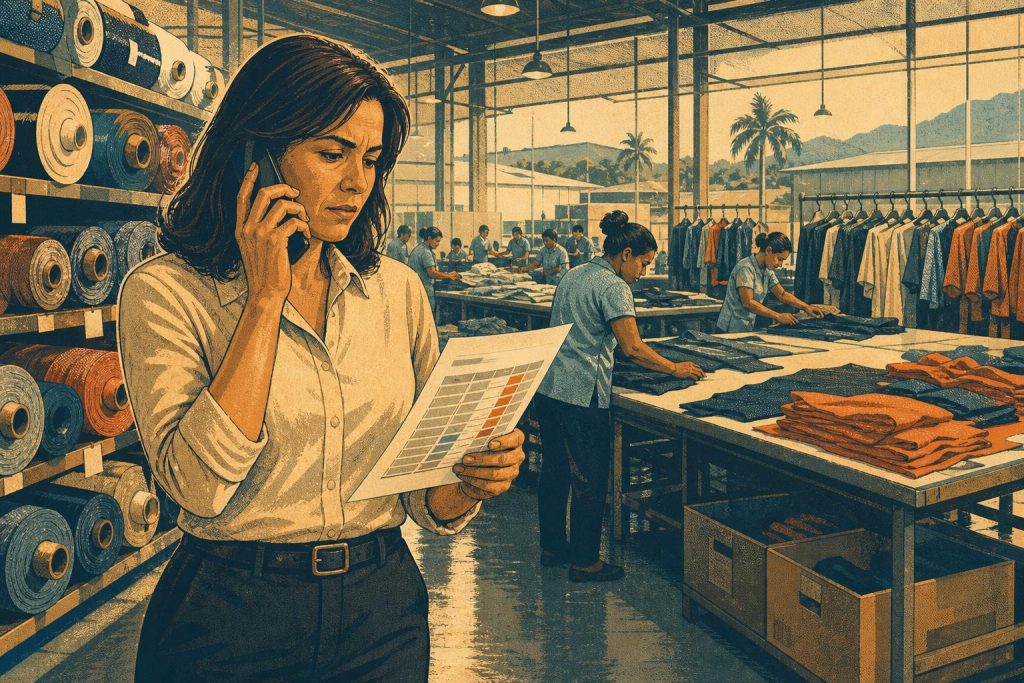
Apparel importers in 2026 cannot file a new tariff exclusion request through the standard product exclusion channel because no such open process currently exists. The USTR has explicitly declined to create an exclusion mechanism for the Section 301 forced labor tariffs now in effect, which means the published exemption list is fixed [clarkhill.com]. The realistic […]
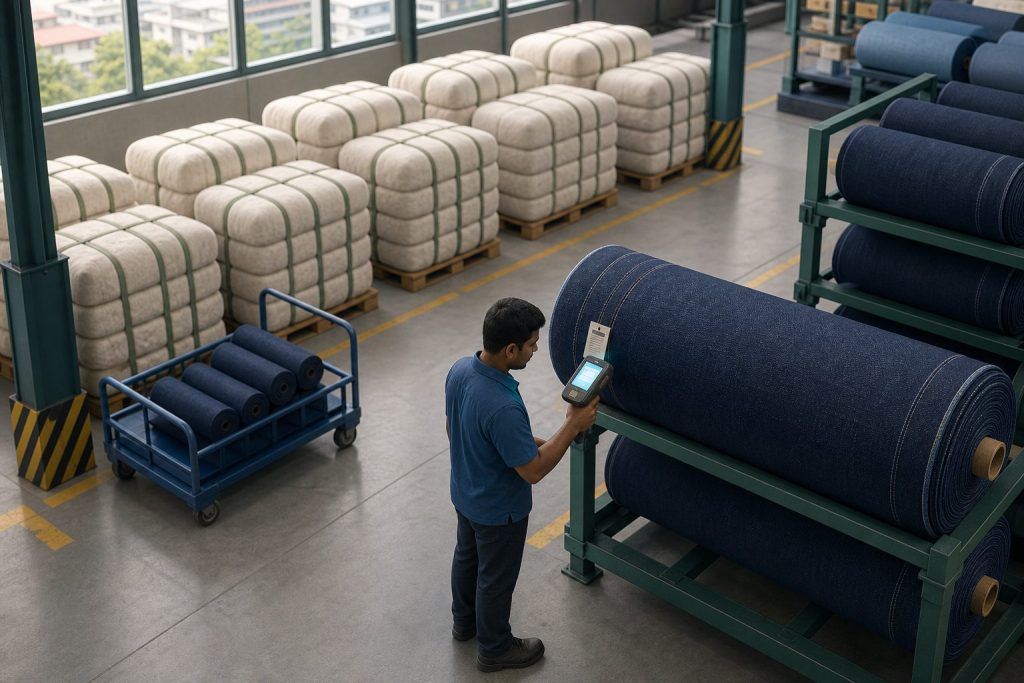
Cotton traceability now means being able to verify, with physical or digital evidence, exactly where a fiber was grown, ginned, spun, woven, and cut into a finished garment. In 2026, this verification is done through a combination of blockchain record-keeping, RFID and QR tagging for physical movement, and forensic methods like DNA markers or isotopic […]

Minimum order quantity, or MOQ, is the smallest volume of a product a factory or fabric mill will agree to produce in a single order, and it varies by sourcing market because it is driven by local production economics rather than an arbitrary supplier preference. China and Bangladesh typically require 500 to 5,000 units for […]